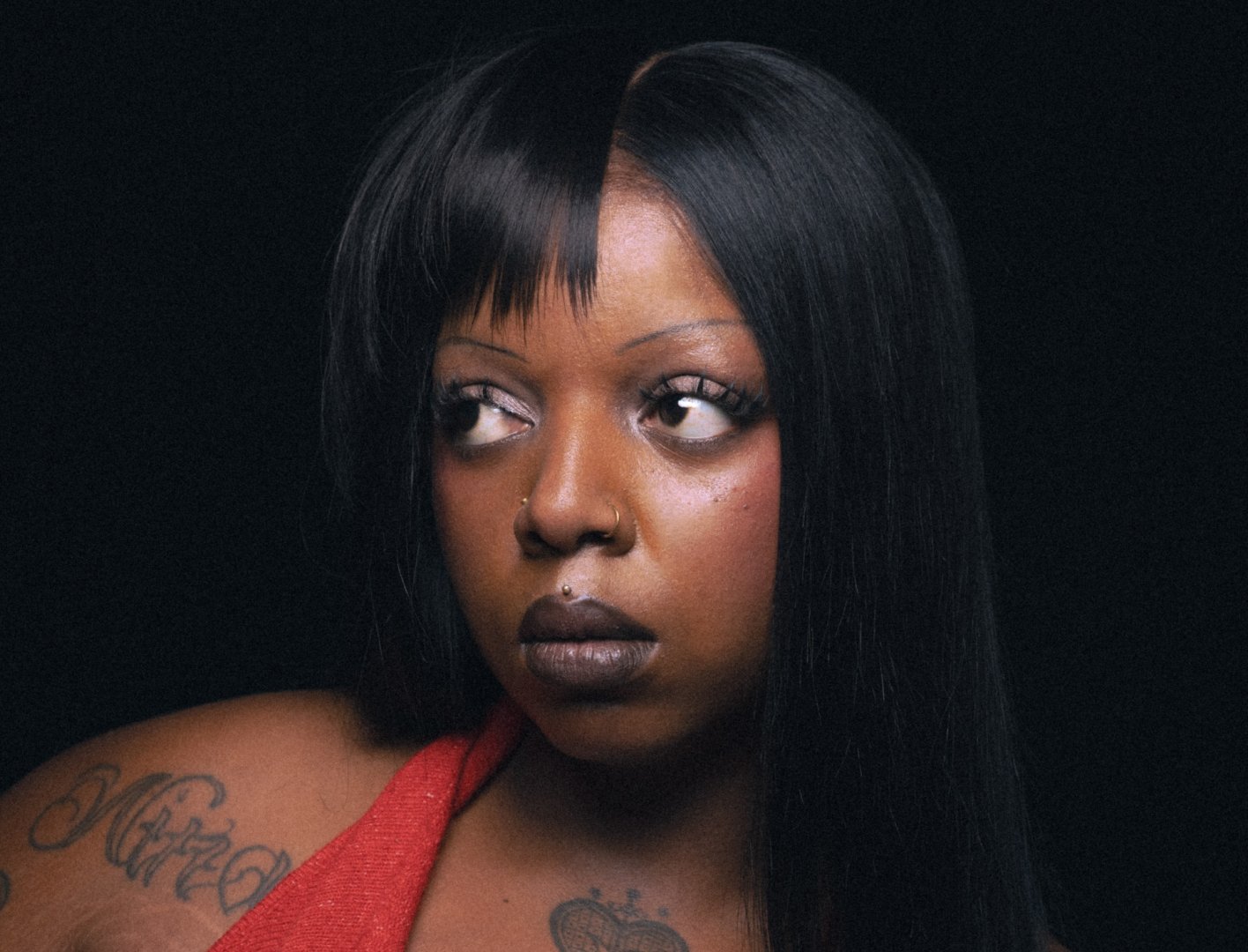
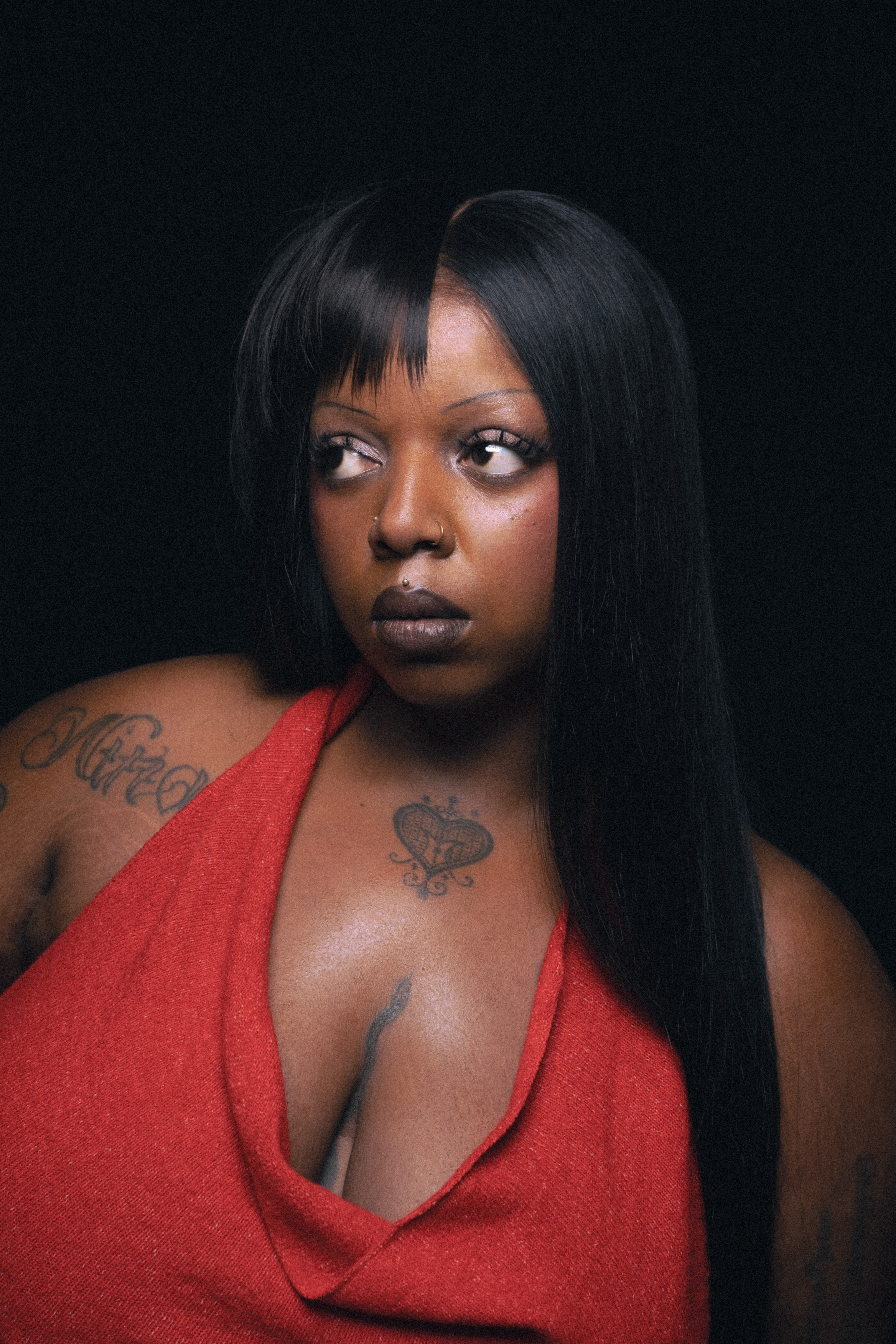
KeiyaA makes music that excavates, discovers, and excavates again, all in the service of exploring life’s most beautiful and daunting questions: What do we owe to ourselves and others? How do the things we desire hint at the shape of our souls? What does it take to achieve peace of mind, especially when the world is intent on denying you of it? Why won’t you love me when I’m so damn easy to love?
Her debut album, Forever Ya Girl, was genre-defying work of simultaneous self discovery and self determination. The production, which pulled from R&B, jazz, electronic music, and soul, was as limitless as the lyrics. As keiyaA grappled with these questions, she wove together genres and crafted a sound all her own: Her gossamer vocals cascaded and floated across slippery funk bass lines, pools of synth and reverb, and samples of Black cultural touchstones like Nina Simone interviews and snippets from Beyoncé tracks.
This rich, complex music resonated deeply with fans and critics alike, landing keiyaA Pitchfork’s “Best New Music” designation, spots on year-end best-of lists from The New York Times, NPR, Rolling Stone, and The Guardian, and praise from artists including Solange, Jay-Z, Earl Sweatshirt, Blood Orange, Kimberly Drew, and Moses Sumney.
The success that Forever, Ya Girl brought keiyaA was thrilling yet confusing. As she experienced this newfound recognition, keiyaA felt a sense of cognitive dissonance between the excitement of becoming a celebrated, rising artist and the reality that she had yet to fully process the traumatic life phase she had experienced preceding its release. “In that intense decade, I dropped out of school in Chicago, and moved to New Jersey with an ex,” she says. “We had a toxic dynamic and broke up, but it was the kind of significant relationship of your early twenties that changes your whole personality. Off the heels of that I lost my job and the pandemic happened. Then my music comes out and my career goes up and suddenly it’s like, ‘Oh you guys think I’m important? You care what I have to say?’ I was trying my best to perform this version of what I thought people wanted from me: lowercase k, capital a keiyaA.”
When the excitement of touring and playing the record died down, keiyaA’s depression symptoms came back “in a way they hadn’t since I was a small child.” In the coming months, she wanted to be active and productive, but found herself watching TikToks and playing video games to experience a sense of the world outside. “I really wanted to go back to being that girl that’s like ‘I’m at Metrograph and I’m on Criterion Collection. I’m putting books on hold at the library and I’m reading all my holds,’” she says. “But I would just be scrolling and playing video games and watching easy YouTube essays where people presented information in an accessible way. So much of that album is about me being numb and void while another part of me is like, ‘Yo, are you not seeing and witnessing this?’ I realized life is a constant cleaning and dirtying and cleaning and dirty. There’s no destination and there’s no group of people that are hashtag healed.”
It was in this environment that keiyaA crafted the music on hooke’s law, her highly anticipated, years-in-the-making sophomore album. Sonically, you can hear the video game influence in the synths and drums, which sometimes approximate traditional chip tune sounds. The arrangements are also meandering, heady, and kaleidoscopic, the sound of life documented as it unfurls, not as you preordain it to be. Emotionally, the influence of this period of time spent at war with herself is evident in keiyaA’s willingness to acknowledge discomfort, and in her embrace of multivalence, of allowing all of her selves to sit together in harmony, friction, or confusion. In a world fixated on singularity, resolution, and efficiency, self acceptance of this nature requires work. It takes reframing, learning how to view yourself not as a project to be fixed or optimized, but a person who is complete in all of your contradictions.
This work of interrogation and radical imagination is what keiyaA does best, not just with hooke’s law, but with its prelude, milk thot. The experimental play, which she performed at The Abrons Art Center in Manhattan, finds her confronting and battling her shadow self. Bathed in a hazy purple glow and cloaked in a cascading white gown, keiyaA transforms her bedroom into a hallowed site of ritual, discovery, and mourning. The play is beautifully designed, dense with meaning, and poignantly enacted. But the most compelling part is not just the skill of the actors nor the potency of their world-building. What keeps you enthralled is the potential of the whole conceit’s undoing.
milk thot is a play that is constantly deconstructing and remaking itself. It begins with keiyaA asleep in her room. In a typical play, the backing band provides unacknowledged diegetic sound. But keiyaA immediately brings them to the foreground by asking them to stop playing so she can go back to sleep. She then breaks the fourth wall again by asking the audience what we are doing there. She spends the rest of the play battling with her shadow self, a carefree and emboldened persona who encourages her to quit her job and stand up for herself more. It’s a suggestion that is so startling to non-shadow-self-keiyaA that she ends up trying to kill her shadow, until the whole play resets and a new day dawns. As you watch her fight herself, the idea of a static, wholly knowable character disintegrates altogether. The audience watched in the play keenly aware that anything could happen next. The boundary between actor and audience is permeable, time is nonlinear, and you cannot assume the idioms and conceits of plays you have seen before will apply here.
* * *
In his essay “The Creative Process,” James Baldwin writes that it is the artist’s job to do exactly this, to draw attention to the alternate ways that art or the world or a person could be. “Society must accept some things as real; but [the artist] must always know that visible reality hides a deeper one, and that all our action and achievement rest on things unseen,” he writes. “A society must assume that it is stable, but the artist must know, and he must let us know, that there is nothing stable under heaven…The artist cannot and must not take anything for granted, but must drive to the heart of every answer and expose the question the answer hides.”
There is nothing stable under heaven. The process of rebirth, of excavating or imagining new selves, new systems, and new ways to exist within them is divine work. It is the work that keeps our minds curious, our hearts open. It is the work that positions our most regular tasks as the site of play rather than of tedium. And it is the only way to keep going, to maintain hope, in a world that has normalized inequity, plunder, and hatred for too long.
* * *
keiyaA wrote the music on hooke’s law over the course of 5 years and finished as she was working on milk thot. Many of the songs on the record were featured in the play, and as with that work, keiyaA is often addressing and re-making herself on the record. “lateeee” is a dense, experimental R&B song, the sound of her mind ablaze with that work. keiyaA’s Autotuned vocals lilt across layered vocals, radiant synths that jolt like lasers, and a twitching drum kit as she sings: “I question my tired and lonesome ways, I’m blessed to conspire another day.”
KeiyaA’s hard-earned self-knowledge is especially important when other people are ceaselessly trying to define her. Electronic jazz track “get close 2 me” is as introspective as it is angry about that reality. She sings cooly and confidently across twinkling jazz keys and synth blips: “Everybody think they know what’s best for me/ Everybody think they know what they seeing/ Maybe I just want to make it clear to myself which parts of me to keep in there.” Throughout hooke’s law, keiyaA does the perilous work of deconstructing and rebuilding her ego so that no one else can do it for her. The record, then, is a document of self-interrogation as a means of survival.
The work functions as a safe space where she can process the conflicting roles she was expected to occupy growing up as a queer Black woman. She often felt invisible but also hypersurveilled when it came to things like her school work or her sexuality. The willful multivalence of self she fosters in the music is an alternative to her childhood experience of being forced to occupy these disparate roles. She feels that she is also “carrying a legacy of pain and awareness that was not mine,” she says. “Things like mistreatment by doctors that my grandmother or mother experienced and don’t speak about, but that I still feel.”
Fittingly, much of the interrogation keiyaA does on this record is political. “Think about it what u think” starts out as an expression of romantic and physical desire. Her voice, glimmering as it is modulated through Autotune, sounds sleek and sultry here, gliding over a bubbling beat. But half way through the song, a meandering bamboo flute changes the tone. The production and Autotune are stripped away so nothing mediates her message as she asks, plainly, “What you think about the fact the world as we know it was shaped by hate and conquering and murder overflowing?” It’s a question so pressing, so unignorable, that it stops the song in its tracks. Similarly on “i h8 u” she exclaims, “the whole system is a scam!” When, on “take it,” she samples audio that says, “Let me come without my mask,” it feels like an appeal for the kind of interpersonal intimacy that allows you to let your walls down, but also for a world in which keiyaA is allowed to present as her fullest self without fear of erasure or hypersurveillance.
On “stupid prizes” she asks, “Tell me how am I’m supposed to thrive when all I’ve known is to survive?” Her voice rings clear like spring water over a shimmering, hazy orchestral arrangement. “I wrote, recorded, and produced ‘stupid prizes’ all in one sitting, at home late at night in my living room in Brooklyn,” she says. “I sampled Percy Faith, an orchestral composer known for creating rich and luscious scores and show tunes, helping contribute to this classic ‘American’ sound. I sought out to create this bed of irony, to speak and sing about being miserable on top of this beautiful, dreamy and romantic music, which speaks not only to what it can feel like navigating my internal and external worlds, but also what it feels like being a marginalized person in America.”
The song is dense with beauty and discordance. Pivotally, it offers no easy solutions. Self love can never be the answer to systemic oppression, to a world that forces millions to struggle while a handful of billionaires reap the benefits of their labor. But to have kept going - to have sung the words, made the art, looked at herself and said, “There is someone here worth knowing, re-knowing, resculpting in the ways I want, and honoring throughout the entire process,” that is one way to thrive.
In “The Creative Process” Baldwin says that the artist must reveal the unspoken truths of a society to itself. He says that this work is akin to that of a lover, someone who sees another with fresh eyes, who unearths the best in them and wills it into existence. It is this gift that keiyaA gives to herself on hooke’s law, a gift we are lucky to witness and learn from, the gift of real, true love.