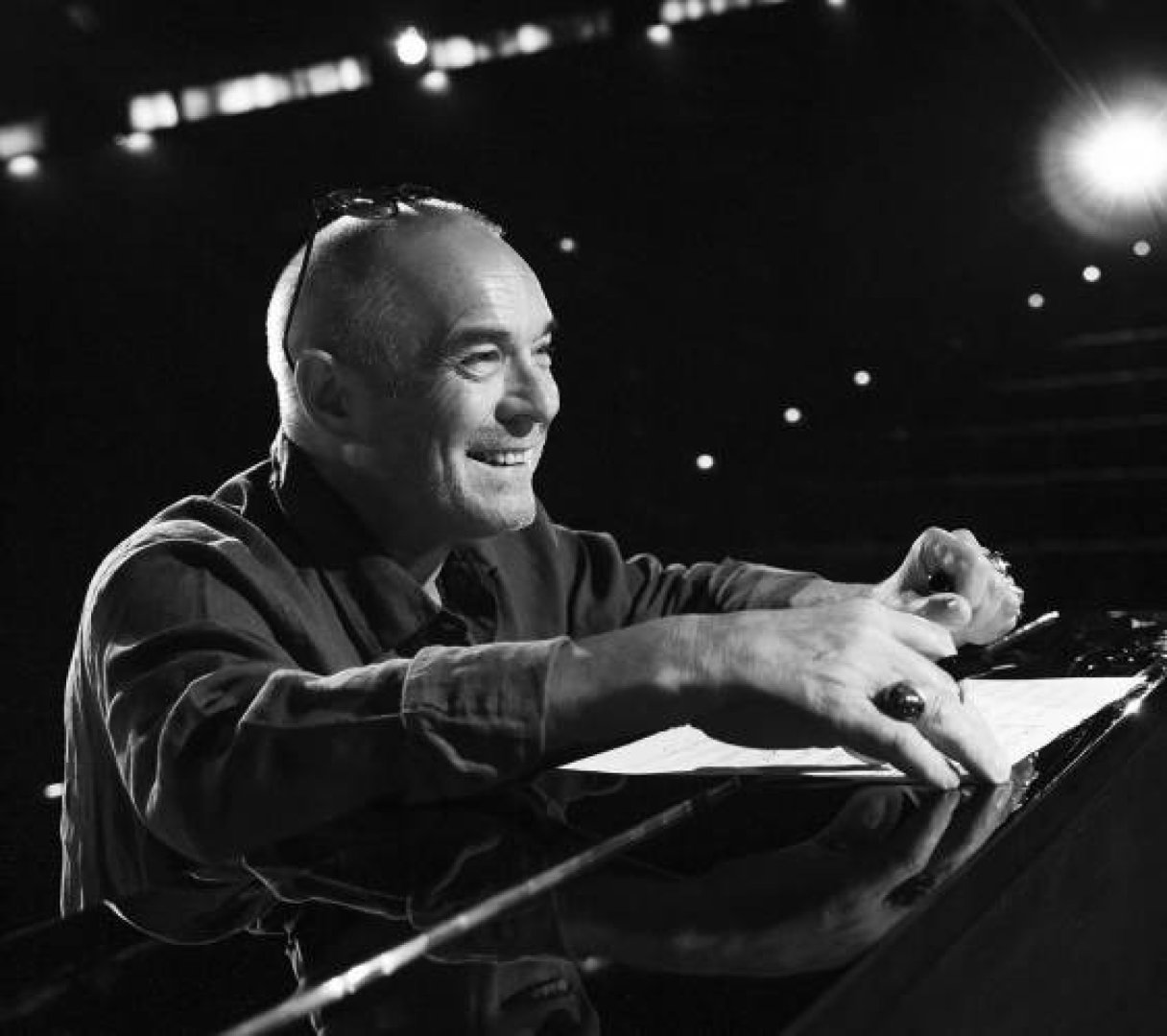
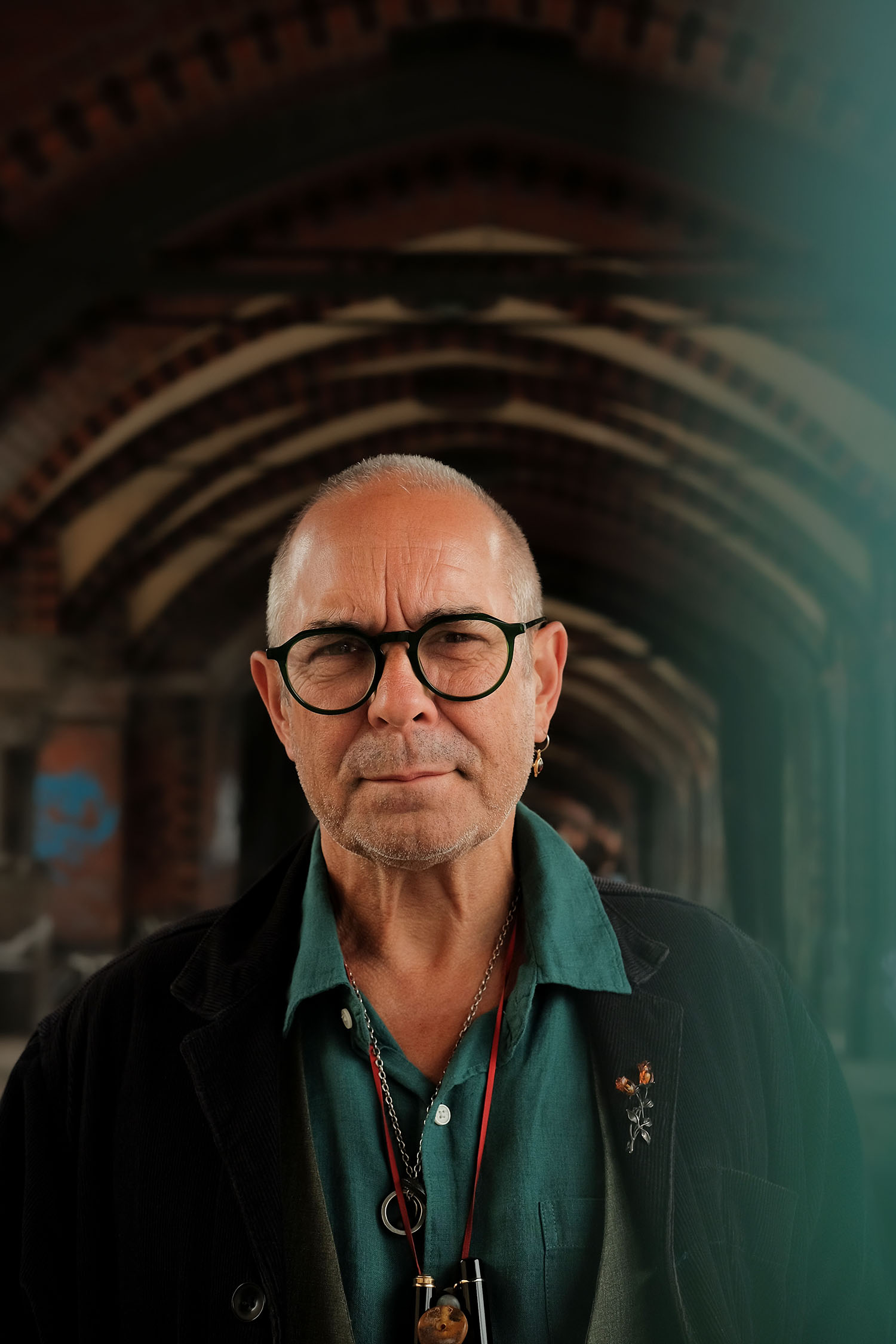
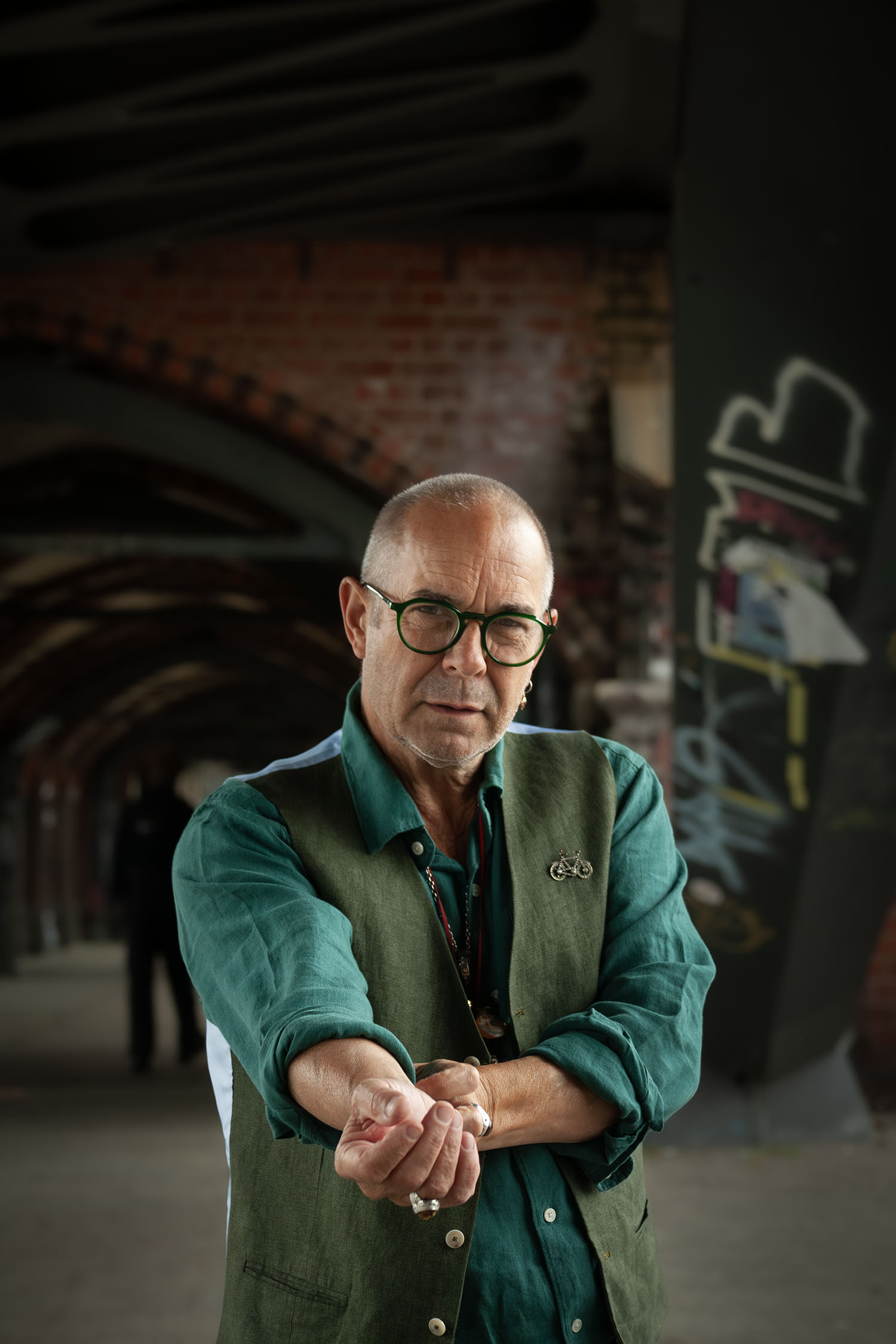
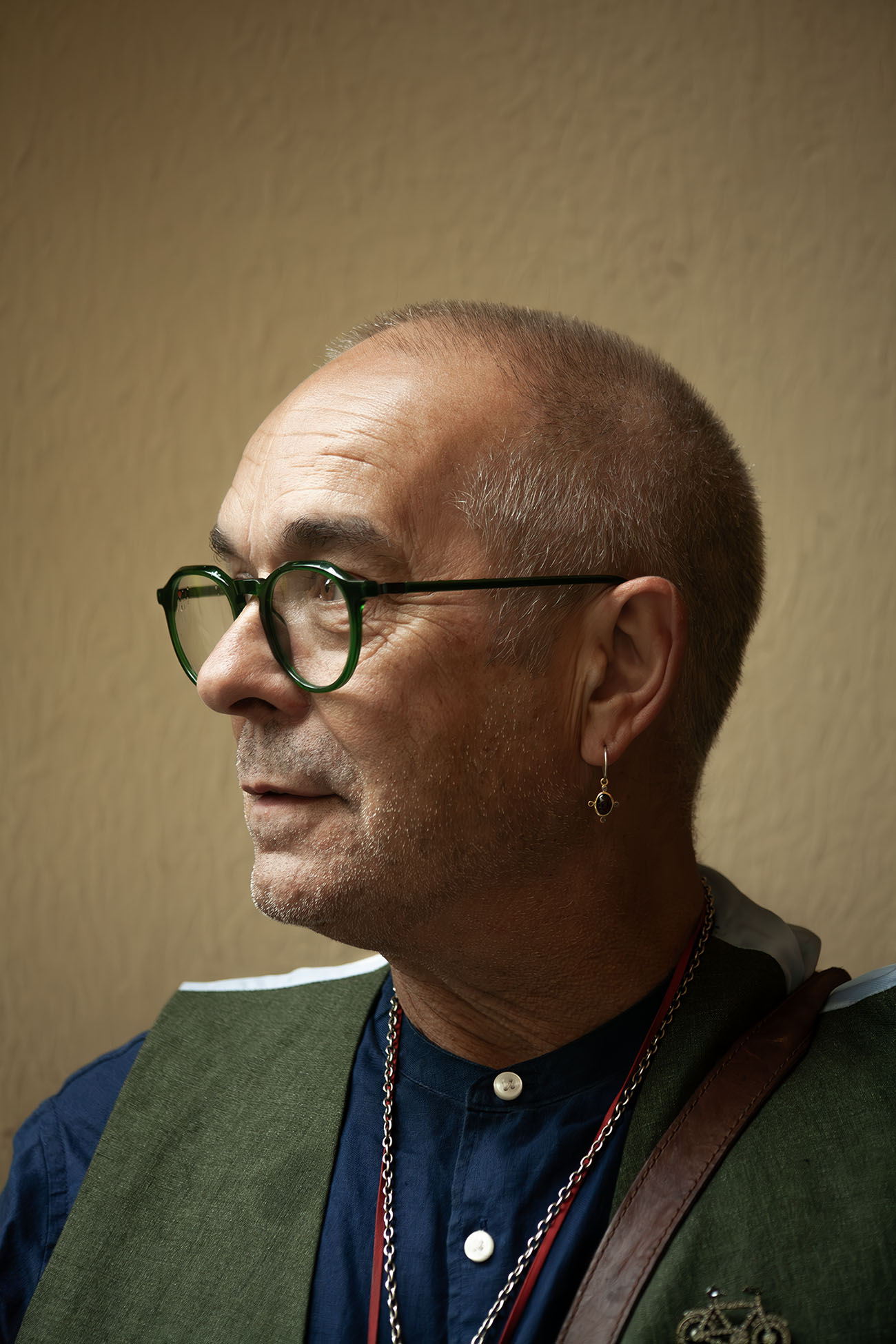
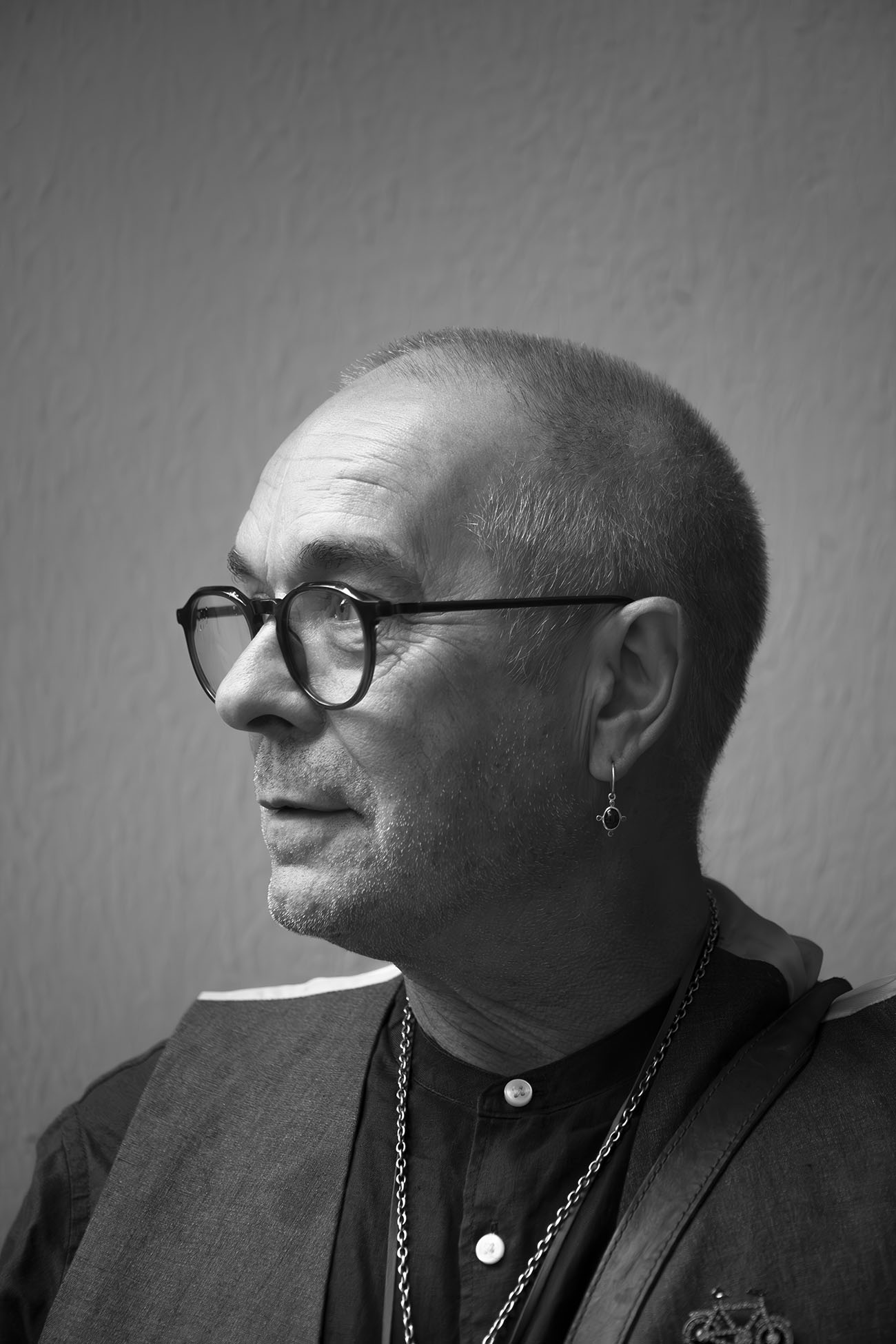
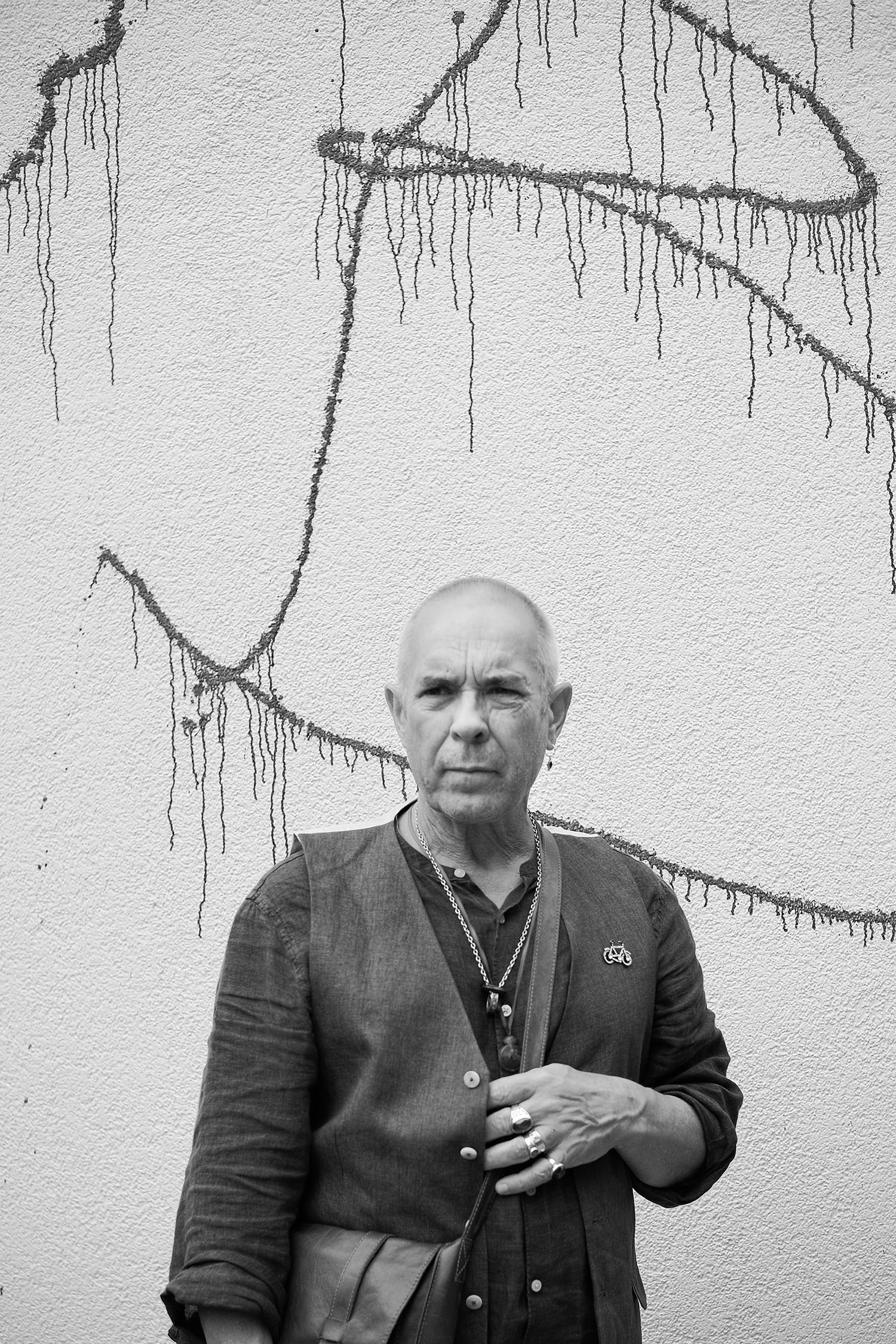
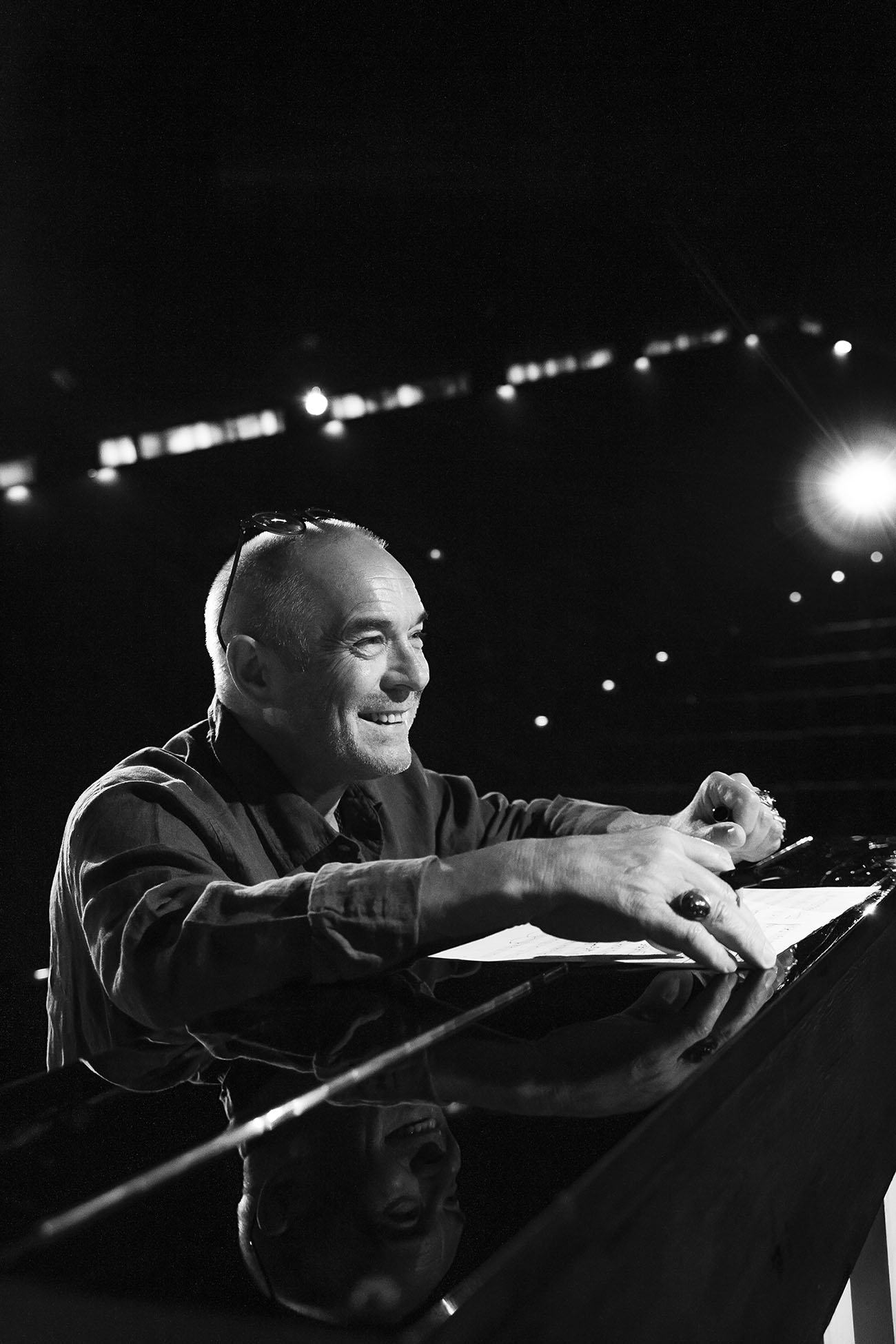
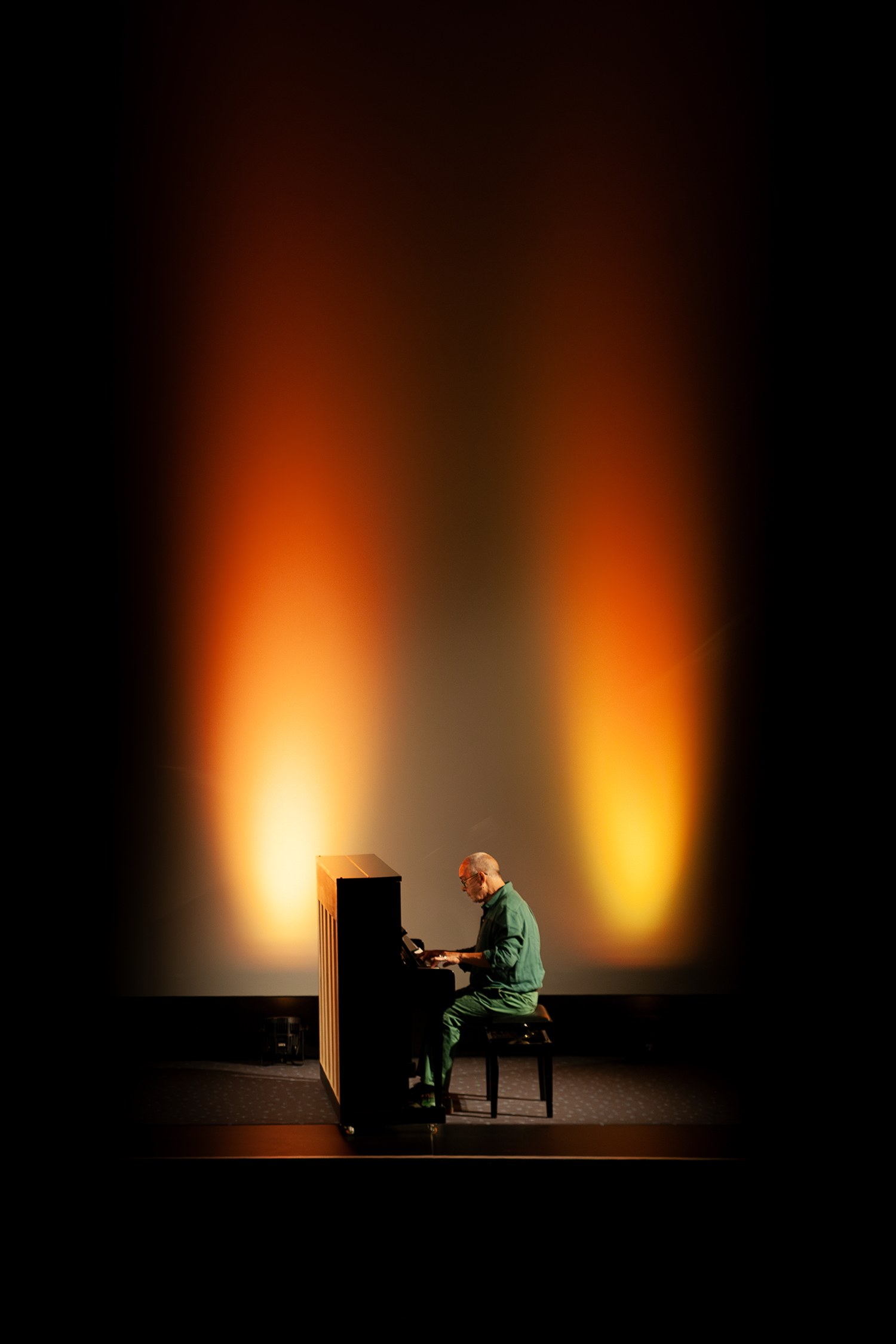
It was spring, 2024, shortly after he’d departed the stage of an Italian theatre, when composer <strong>ROGER ENO</strong> realised that the time had come to ring the changes. “I’d reached a level where I was polishing rather than looking for gold,” he elaborates. “It had all become overfamiliar. I thought, ‘I've got to do something else!’ I knew I needed to challenge myself, and that the moment was right.”
Eighteen months later, Eno reemerges with <strong><em>WITHOUT WIND / WITHOUT AIR</em></strong>, the most challenging work of a career that’s already lasted over forty years. Though its dozen pieces were, as is his wont, born at his piano during daily improvisations, it finds him, in collaboration with producer Christian Badzura – also his A&R at Deutsche Grammophon, with whom Eno’s worked since 2020 – venturing way beyond his comfort zone, only to discover he’s rarely been so at ease. Known best as a pianist, Eno flaunts an exhilarating curiosity, embracing complex, often disconcerting orchestral arrangements and exercising an endlessly receptive enthusiasm to cut both to the chase and the quick. As Badzura puts it, “When people get older, they usually get milder. Roger is becoming more punk.”
With the British musician’s assertive dissonance sparing us pat reassurance, <strong><em>WITHOUT WIND / WITHOUT AIR</em></strong> tackles tough themes, many associated with conflict and resolution. Indeed, it acts as a warning, and in that it’s much like its title, taken from lyrics to ‘Doubled by the Sun’ by Italian band The Doubling Riders, with whose Pier Luigi Andreoni Eno has sometimes worked. “It’s a beautiful, dream-image filled poem, utterly lovely,” Eno says, “and that was always enough, until recently I was forced to look at the fragility and dependence of, and on, species, climate, turns of ‘chance’ and carelessness.”
Recorded at Badzura’s home in Berlin and the city’s Teldex Studio, and conducted in part by Johnathan Stockhammer, <strong><em>WITHOUT WIND / WITHOUT AIR</em></strong> boasts a frequently inescapable foreboding, with the opener, ‘Forgiveness’, setting out Eno’s stall. It’s led by the disembodied harmonies of soprano Grace Davidson, a specialist in Renaissance and Baroque music, who’s soon accompanied by Alexander Glücksmann’s ominous bass clarinet, sweeping strings and even percussion, the ensuing crescendo not only impressive but as unnerving as witches celebrating an imminent evil.
‘The Final Year of Blossom’, too, hints at devastation, its lurking synths and vivid brass like a Henryck Gorecki elegy to its titular, colourful flowers. “They say there’s a tragic beauty to the transience of Japanese sakura,” Eno cautions. “Well, one year that's not going to happen again. This is about that year.” Moreover, the reverb from Davidson’s contributions also goes on, like a ghost in the machine, to haunt the album’s title track, where eerie drones and ethereal instrumentation, combined with sublimely understated piano, offer the menacing beauty of a darkening, incoming storm. The distant echoes of Morton Feldman and Hiroshi Yoshimura are no better, either, at concealing the innate tension amid the audaciously lingering chords of ‘Saudade’, while the creeping, magical but miasmic ‘Mist’ is especially well-named, as befitting the opening scenes of David Lean’s adaptation of Charles Dickens’ Great Expectations as the end of Michael Mann’s Heat.
‘Massacre Of The Innocents Part 1’, meanwhile was written on December 28th, 2024, which Eno explains for the less theologically inclined, “is the day of the Feast of the Holy Innocents. That’s when Herod learnt a ‘new king’ Jesus, had been born and sent his soldiers to kill all the males under the age of two. Here we are 2000 years later and very little has changed. “What good writing ‘a tune’ will do,” Eno concedes, “I don’t know, but I write music, so I did this. If music can change an individual, then yes, it can change the world.”
At 66, Eno also has other reasons to reconsider his artistic approach. That’s why, though until recently he’d never been sure what one looked like, the album’s cover features a mayfly, whose brief existence had, to him, long represented a parable. “Their objective,” he summarises, “is to fly and mate, and then, after only a day or two, they die.” Their significance became only greater still after his wife bought him a birthday gift of a bottle of gall ink, which he used with a glass nib on a beloved fountain pen. “I began doodling, long dribbled lines and blobs, spindly rivulets,” he recalls, “and after a few minutes I looked at what I’d done and it appeared like a cluster of insects in flight. A few weeks later, I saw exactly that image above the river near where I live. My daughter, who was with me, told me they were mayflies. I’d drawn them days before I’d seen them! Now, isn’t that a thing?”
Despite <strong><em>WITHOUT WIND / WITHOUT AIR</em></strong>’s precarious atmosphere, there are nonetheless moments of peace, not least amid the stillness of the Celtic flavoured ‘Spell’ as well as on ‘Tapestry’, which weaves together piano, voice, strings and electronica, almost suspending time. There’s also ‘Alembic Distillation’, the record’s most formal moment, on which Eno reduces the spirits of Bach and Scarlatti to their essence, and the lugubrious, reflective ‘After The Rain’, a closing track inspired by one of Irish writer William Trevor’s short stories. Admittedly, it’s hard to discern if its petrichor scent is provoked by spring drizzle or a poisonous downpour, but there’s further relief midway through the album beneath the clear skies of the unforgettable ‘There Was A Ship’.
Heralded by his daughter Cecily’s sweetly delivered, “I saw the clouds begin to part/ As one by one the stars came out”, this, her father says, “is about the love between two people who have been separated and finally reunited. It’s the happy ending we all want. You see it at train stations and airports. It’s about love after separation, after pain. It’s about love forever after.” Written as a folk song, it was first performed, alongside both Cecily and Brian, Eno’s brother, on a sweltering night in August, 2021 at the Acropolis in Athens, Greece. Though basking in the moment, Eno was simultaneously watching the heavens rain ashes from nearby wildfires and couldn’t help but shed a few tears. These weren’t, however, only grief-stricken. “I was weeping for what I have,” he says, “what chance or fate has given me. I really think I've been charmed. I’m blessed to be in a ‘job’ where weeping, whether with joy or sorrow, is acceptable, even fruitful. What good fortune to be in such a position.”
It’s no coincidence Cecily sings on <strong><em>WITHOUT WIND / WITHOUT AIR</em></strong>, as well as providing and designing its artwork. “My family are my best friends,” Eno grins proudly, “and believe me, they're good at what they do!” Badzura attributes this bond to trust, a quality which, having worked together on 2022’s The Turning Year and 2023’s The Skies, They Shift Like Chords, he extends to their own collaboration. Consequently, any difficult creative conversations were dispensed with early on, after which they followed their instincts spontaneously and transparently. “The art’s intention is always strong,” Badzura confides, “but we’re always ready for magical happy accidents.”
Arguably the most striking of <strong><em>WITHOUT WIND / WITHOUT AIR</em></strong>’s twelve pieces is the Tantalean ‘The Moon And The Sea’, on which Eno sings, captured first take behind the Steinway piano in Badzura’s home studio, his voice tremulous, vulnerable and exposed. For him, the song is about “impossible love, as simple as that. As much ‘There Was A Ship’ is what everybody wants, this is the bit that doesn't go right, where there's always this person, this object of want, just out of reach.” Badzura still clearly remembers the first time they reunited to listen to the mixed track. “I simply had no words,” he looks back. “You think it's polished, but it's pure rawness.”
On <strong><em>WITHOUT WIND / WITHOUT AIR</em></strong>, Eno confirms that what once may have tantalised him is now within his grasp, and it’s no accident the record was recorded in Berlin. “We didn't ‘British’ anything out by tip-toeing around or becoming overly diplomatic in our discussions,” Badzura chuckles. “Sometimes Roger wrote something really direct, and I was glad he was taking that shortcut. He really embraced that honesty and it made him even more confident.” Indeed, <strong><em>WITHOUT WIND / WITHOUT AIR</em></strong> makes no room for complacency, Eno having conceived what may be his boldest, most candid, most questioning album to date. Crucially, though, it was made without fear but still reminds us why fear exists.
<strong>Wyndham Wallace</strong>