Pitchfork | Interview: Bill Callahan Laughs at Death
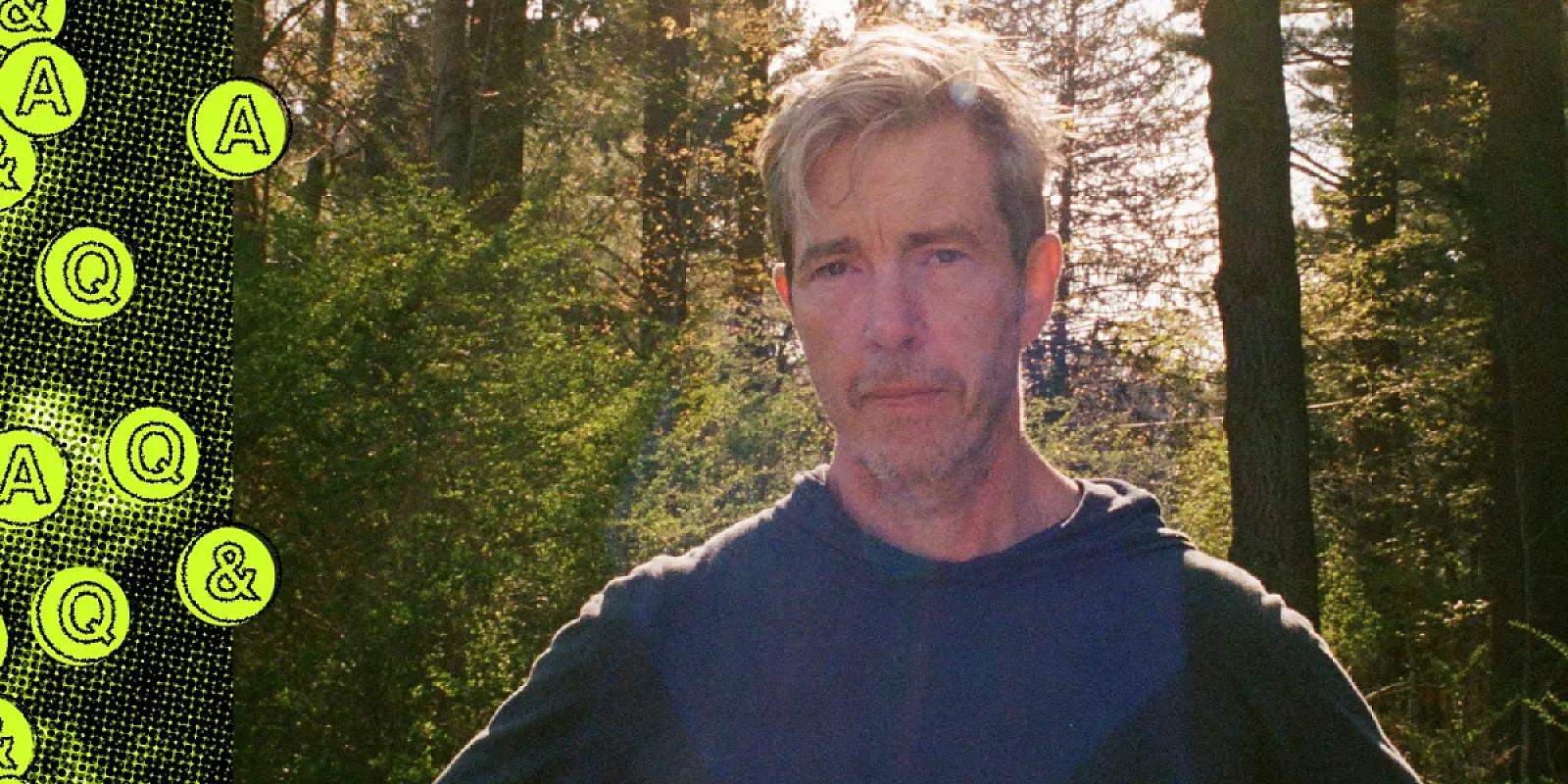
“Life, human life, is my main interest,” Bill Callahan said recently over a Zoom call from his backyard studio in Austin, Texas. “It’s not technology or football or whatever, it’s just human psychology.” An hour-long conversation with the 58-year-old musician bears that out. Over the past 30-odd years, Callahan has distinguished himself as one of America’s great singer-songwriters, with a probing eye for detail and an acidic wit, but it’s easy to imagine that had one or two biographical details gone differently—had he not returned to the guitar after quitting it as a teenager, or never picked up the four-track recorder upon which he recorded his scabrous early noise tapes as Smog—he might instead have blossomed into a novelist, or perhaps an ethnographer. But a singer is what he became—a vocation he interrogates, in habitually eagle-eyed terms, on “Why Do Men Sing,” the reverently country-fried opener of his new album, My Days of 58, in which a white-robed Lou Reed, subbing in for heavenly keymaster Saint Peter, teaches him the secret of life.
Back in his days writing knotty indie-rock character studies, Callahan once had the reputation of being difficult to interview, but over the past decade or so, something changed. He’s hardly a garrulous sort, but these days he’s open about his own life in a way that he once wasn’t. And while you still get the sense that he doesn’t suffer fools easily—in a public interview at Krakow’s Unsound festival a couple of years ago, he shot down my clumsy attempt at an opening joke with a pitying look that made me want to disappear right there and then—the man who once described himself as a teenage spaceship, hovering just out of reach of mere mortals, has clearly warmed to his fellow humans. The lengthy pauses in his answers once seemed designed to unsettle clueless interlocutors, but these days he deploys them, more often than not, for comic relief.
Long averse to discussing his own life, whether in song or for a reporter’s notebook, Callahan opened up with his 2019 album Shepherd in a Sheepskin Vest, a chronicle of the ways that fatherhood and marriage had reshaped him, and he’s been on a roll ever since. His latest album, My Days of 58, might be his most candid yet. He takes an unsparing look at his relationship with his late father, confronts his own self-professed failings as a husband and dad, and comes clean about the times he’s used his guitar as a shield to protect himself from other people.
Yet musically, it’s among the most unburdened sounding records in his catalog, full of lilting acoustic guitars and buoyant horn charts—he calls it a living-room record, but it also feels like a road record, custom-made for flying down the interstate he declares his affection for on “Highway,” one of the sweetest love songs of his career.
Both those aspects—the self-searching and the sense of freedom—stemmed from an unexpected piece of news he received a little over a year ago, when lab tests came back with troubling results. That diagnosis led directly to “The Man I’m Supposed to Be,” and its shout-it-from-the-rooftops refrain: “We take life seriously/Laugh in the face of death.”
Pitchfork: Last time we spoke, in late 2024, you said something to the effect that you’d been experimenting with not writing songs for a while. Was there a time between the last album and the new one where you were intentionally not writing music?
Bill Callahan: It was a very brief time and I was joking a little bit, but lately I’ve been thinking I could do so much more. It used to be so all-encompassing and satisfying just to make a record every year or whatever. I guess I toured a lot more when I was younger, and that took up a lot of time. Lately I’m thinking I could do more. Either make more records more frequently—which is kind of discouraged by the press, really, because they don’t want to write about you too often, but I don’t really care about that; I mean, sometimes I’ll make a record and they don’t want to write about it anyway—or doing something else in addition to music.
What would you do if it wasn’t music?
Well, I’ve had some offers to do classes, songwriting classes, which I’m probably going to do. No one taught me except other musicians, through osmosis, but my personality meant I liked figuring it out on my own and not having anyone polluting me with their ideas. But other people are different and some people want direction and exercises and stuff. There’s that. And also I really enjoyed writing my book, 300 years ago. I’ve sort of been dabbling in writing some prose again. I want to expand my horizons a little bit, because just writing a record and touring—I’ve been doing that for 30 years, and while I still enjoy it, I’m starting to get some other itches. I’m getting older, so it seems like I could maybe start passing down some knowledge to younger people.
It doesn’t surprise me that you would be interested in writing more prose, because your lyrics are so literary, for lack of a better word.
Yeah, but I think there is a huge difference between songwriting and other types of writing, because the writing is just one leg of the whole thing, whereas prose has only got one leg. There’s no sounds and there’s no performing it. I think the way my brain works lends itself to songwriting, because it’s kind of fragmentary, but concise fragments like that on a page would need some backstory. In a song they don’t need backstory. Maybe the music is the backstory. But I’m not going to write a Moby Dick type of thing.
Can you walk me back to the beginning of writing My Days of 58? Was there a particular catalyst for it? I’m wondering how conscious or intentional the process of embarking upon a new album is for you.
It usually starts just like a little dot—you’re staring out at the ocean and there’s a little dot and you’re like, what is that on the horizon? Am I imagining something? Is it a ship, or a monster? Then it starts to get closer and closer and then more and more formed as it gets right in front of you. In an abstract way, that’s how all my records start. Just like I’m looking on the horizon. Sometimes there’s nothing there. And then finally there is something, and I fixate on that and that that’ll be the album, really. I had some little skeleton parts of these songs, but I wasn’t really feeling it. And then, luckily… [long pause] I got cancer last January, or last December, and that really helped me write these songs.
That kicked your ass into gear.
Yeah, thank God for cancer.
I don’t mean to be flippant. You say “luckily,” so I’m assuming that’s gone, or under control?
I hope so. Yes. It’s under control. I had surgery. The tumor was stage one, so I didn’t need any chemo or anything. It was a colorectal thing and I have my follow-up a year later. My colonoscopy is a week from yesterday. I guess they’ll find out then what it’s looking like. But as awful as that was, as the biggest mirror to my mortality that I’ve ever had held up in front of me, it did give me something to write about.
I’m beginning to understand where certain lyrics came from, like “Take life seriously/Laugh in the face of death.”
Yeah, I wasn’t sure if I wanted to share it explicitly with the world, but I hate lying to anybody. I don’t think it’s good for your soul or your psyche to lie. I mean, that would be protecting my privacy, but I don’t know. It still kind of sets off a little cortisol twinge whenever you lie—it would probably cause more cancer or something. So I just decided, if it comes up in interviews, then I’m going to just be honest about it. And it does seem to be something that’s for some reason really affecting a lot more people these days. Something’s going on.
Something in the water.
Yeah. But anyway.
Do you remember the day you wrote the first song? Maybe there was no definitive starting point for it if you had, like you said, skeletal pieces lying around here and there, but do you remember the day you wrote what would become the first song for the album?
Well, “Pathol O.G.” is a couple years old, actually. I was doing that live at solo shows. And then “Stepping Out for Air” started 15-plus years ago. Warren Ellis and Jim White and I were talking about making a record together, all that long time ago. I made some demos of three or four songs and sent them to Warren and he added some stuff on top of the demos. So that song, in some form, was in existence 15-plus years ago, and then I added a couple verses when I was getting ready for this record. I wrote “West Texas” earlier too, after I played a show at a festival out in Marfa—kind of wrote that on my drive home. But “The Man I’m Supposed to Be” was the first post-diagnosis song I wrote.
Tell me a little bit about writing “Why Do Men Sing.” It’s such a great way of pulling back the curtain not just on the album, but on your whole career.
I was reading one of Merle Haggard’s biographies and thinking, you know, he was such a tough man—he just had a hard childhood, rough-scrabble and then got into petty crimes and ended up in juvie and escaping from juvie and into real prisons. So he is a tough motherfucker and he looks like the epitome of manhood. He’s just a beautiful man, really—manly face and body, but then such a tender singing voice, and his thoughts are just so tender and feminine. And I was thinking about Waylon Jennings, an even tougher guy, with a leather jacket. His seemed like a little bit more of a costume, kind of like, I’m going to look tough, but I’m dying inside. But just thinking about this leather jacket and his rings and stuff, expressing your emotions and talking about your heart and your heartbreak doesn’t necessarily fit into the idea of masculinity. So I was just trying to figure out that juxtaposition, like, how does it all sit together?
And then after my diagnosis, I had a dream about Lou Reed. I got a death sentence and I went to heaven. Lou Reed showed me how to get to heaven. I was just hiding in this little closet thing and no one was coming to get me. I know other people’s dreams are excruciatingly boring, but then Lou Reed is like, come on out into the apartment. And he was all dressed in a white robe and he had a wife, like a Malaysian wife that wasn’t Laurie Anderson, and he was nervous. They kind of sat in a circle for a while and he shook my hand and then he was like, I got a show tonight so I can’t really talk to you, because I got to go get ready for my show. He left, and I left the room. So that’s in there too.
That must have been a weird dream to wake up from.
I found it kind of reassuring. I tend to have more and more… I believe that there’s a heaven of some sort that we go to when we die. And I’ve had dreams about musicians a lot. Like kind of meeting them, the dead musicians, meeting them in the afterlife. So it’s actually a really good feeling because it’s like, we’re all going to die, but maybe we do get to hang out with Lou Reed and see him play shows.
The deaths of your parents have figured pretty prominently in the last two records. You wrote about your mother on “Lily” on REALITY and you wrote about your father here on “Empathy.” Were those songs hard to write?
It felt completely necessary for me. My parents were I think the most mysterious people I’ve ever met, but also very stifled in their emotional intelligence, being able to talk about their feelings honestly. I just observed them for whatever, 40, 50 years, so they’re like my longest-studied subject. And I’ve always had confusion about them. Most people that I know, I’m pretty clear on how I feel about them and how they feel about me and how they feel about their life and how they feel about being alive. That’s what I do with my friends and my family, we talk about this shit, and it’s really interesting because life, human life, is my main interest. It’s not technology or football or whatever, it’s just human psychology. So writing those songs about my parents was really just a way for me to try to understand them. Just keeping it in my head, wasn’t seeming to work. I did have some reservations about, like, should I make this public? But I waited until both of them were gone from Earth.
Especially with “Empathy,” I look at it as part one of maybe a trilogy or something. I had to write the first part in order to get further understanding of my father and me. And also I realized that they’re not gone. I feel like since my parents died, they are here with me in a pure form and more constantly than when they were alive. I guess it’s just their pure spirit is with me now, and none of their masks or self-delusions or any of that, it’s just their pure spirit that’s with me. And I realized after I wrote “Empathy” that my dad is hearing this. I’m just getting started.
I find that a reassuring way of looking at things—that they remain with you after death, but without the complicating factors of when they were alive.
Yeah, it’s just all the good. It’s just the love, really. The good.
Something I like about “Empathy” is that it seems to be about the way that your father shaped you, but also the way you hope your children can be free of a certain legacy of what went wrong between you and him.
I am a really different person than my dad. A lot of people, when they have kids, they kind of springboard off of their parents. They’re like, I want to be just as good as my dad. And some people are like, my dad sucked. I’m going to do everything the exact opposite. I didn’t have either of those feelings. I approached fatherhood just really consciously, from my own volition or desires. I’m not saying that there aren’t parts of my dad that are implanted in me, because that does happen. It’s always weird when you start thinking about it. It’s like, well, I’m not like my dad. But then when you start talking about it, it’s like, wait, I’m exactly like that. I wrote about this in “Bowery,” which was on an EP, but his dad was not supposed to be his dad. He was a major Bowery alcoholic who happened to get my grandmother pregnant. My dad was really bitter about that. What is my point? [long pause] Just that I don’t know. We are like our parents and we’re not, at the same time. I’m not like my dad, and my son is not like me in a lot of ways. He shares more traits with his mother, and my daughter shares more traits with me. And then at the same time, that’s just 30 percent of them. And the rest is just, they were born with this implanted soul and personality that has nothing to do with me or my wife.
I do think our kids are given to us. I think our kids do choose their parents from up [there]. I think they’re souls observing us, and then they think, OK, I need to go to that family for whatever reason, teach them a lesson. My son is very naturally empathetic. He certainly didn’t get it from me. And he’s corrected me. Sometimes I’ll make fun of—there’s these influencers on YouTube that he likes and they usually have really goofy looks, to try to stand out or be memorable, or they just have creepy faces. Like Mr. Beast, I think he’s got a really creepy vacant smile, but my son hates it when I say anything bad about the way someone looks. He’s like, how would you feel if they said that about you? I’m like, yeah, you’re right. But Mr. Beast is totally creepy. Don’t get in a van with Mr. Beast.
It’s funny because that brings up the song “Computer,” which strikes me as the most polemical song that I can recall you ever singing, and the most topical one.
Yeah, it’s almost like a taboo. Even the title, I was like, can I call a song “Computer”? When I’m Mr. Nature? Everyone seems to think it’s remarkable that I write about nature a lot, but I mean, nature is life. I don’t understand why anybody really needs clarification on that. But anyway, writing about a song about a computer, maybe it seemed taboo, but at the same time I was like, nobody has really talked about the fact that we all just kind of accepted this thing called the internet. It started out as a cute little message-board thing that was kind of innocent and fun, and then it turned into…
A prison.
Yeah, Pandora’s box, everything bad came out. And then AI. I feel like there is kind of a pushback against that. Half the people like it and half the people don’t. And I’m kind of heartened to see that at least some people don’t like it. I know that song probably has the shortest shelf life of anything I’ve done. But I was like, fuck it. I’m going to say something, just get it off my chest and see what happens.
Is songwriting therapeutic for you?
It helps me understand, I guess. It helps me formulate my thoughts. If I didn’t, I’ve got a nasty habit of just kind of letting things swim around in my head. So songwriting has always been my way to get those things out. Nothing I’ve written is definitive; I don’t try to make definitive statements. I try to make stair steps to enlightenment. So each song is just another step up. I can’t go right to the top. I need to go up slowly. I learned from making songs, a couple of years later being like, that’s not quite how I feel, or that’s not what I meant exactly, or now that I’m different. I think being a human, for me at least, is all about changing and growing, and the songs kind of fit into that. It seems like some people are very rigid and they have their ideas and they stick to them. But I’m like more of a little growing sprout that is changing. [chuckles]
You sing something interesting in “Pathol O.G.” about a period of turning to your guitar instead of other people in times of confusion. When did you discover that you were doing that?
I guess it probably started once I had kids, and my time was no longer 24 hours a day. It was no longer mine to do with as I pleased, seven days a week. So I learned to condense. I learned that I could condense my work and that I probably only have three creative hours in a day, and it needs to regenerate through doing other things, like interacting with humans and exercising and not doing anything and whatever. So that was the genesis of when I realized, hey, maybe I don’t need all this time that I’m taking, and maybe all the time that I’m sitting with my guitar is not actually fruitful. Maybe I’m escaping things that I should be doing instead. But I’ve got my guitar, a little shield, and if someone opens the door, it looks like I’m doing something.
Quite a few songs on the record feel like love letters to specific places—“West Texas,” “Lonely City,” “Lake Winnebago.” And then “Highway” is a love letter to the road itself. Clearly, touring and being on the road is important to you. How do you balance that instinct for roaming with the desire to be at home with your family? Is that a difficult balance to maintain?
Kind of. I mean, they’re two different lifestyles, completely different. They’re the opposite. One is like, this is my roots, and the other one’s like, I don’t have roots, so they both feed each other. I need one and then I need the other. And then once I’m doing one, I need the other one. I do struggle with how much I should be gone, how much I should be home. That’s hard to figure out exactly. The other day, I just got in my car by myself to do an errand, and I was like, I love being in my car and driving—there’s something about it that really centers me and feeds me. When I do tour, my time is much more my own, and I really descend into the kind of artistic hole where I’ll just maybe listen to, I’m going to get every album by this artist and listen to it every day, or I’m going to read this author, and I can’t really do that at home. And I’m so hungry for that. Once I get on the road, I sink right into that mode and latch onto it and really love it and value it, and I know that it’s feeding my music, but also going to make me go home. And that part of me will be satisfied when I go home and have to live a more domestic life.
You used to be famously resistant to discussing your own life in interviews, or at least the relationship between your life and your songs, and at some point that changed, I guess around Shepherd in a Sheepskin Vest. What changed for you, and how conscious was that shift?
I think that having kids did make me feel more a part of the human race. Before having kids, I felt more like I was just a loner and my songs were coming just from me. And then having kids forces you or encourages you to embrace the whole neighborhood and city and world. When I started out, I didn’t do interviews at all. It always seemed kind of cheating when an artist would say, oh, I had this terrible breakup. Here’s my record about it. It seemed kind of cheap to me. I wanted the songs to be so good that they didn’t need any backstory. Who is this guy that made these—even I want to know about the people that I like; it’s a very natural urge, and I guess can enhance the music—but my idea was to keep my life private, and if the songs didn’t slap then I had to work harder. But then I realized, like I said a little while ago, human existence is my hobby. I like talking about what a human goes through, and what else am I going to talk about? I don’t know much about song structure or chord progressions or anything, music theory or things like that, so I was like, well, I guess I might as well talk about myself. Sometimes it does feel a little bit like I’m in a therapy session, and I find myself talking about my dad. Classic. “Tell me about your parents.” But I don’t know. That’s what I write about, so it makes sense.