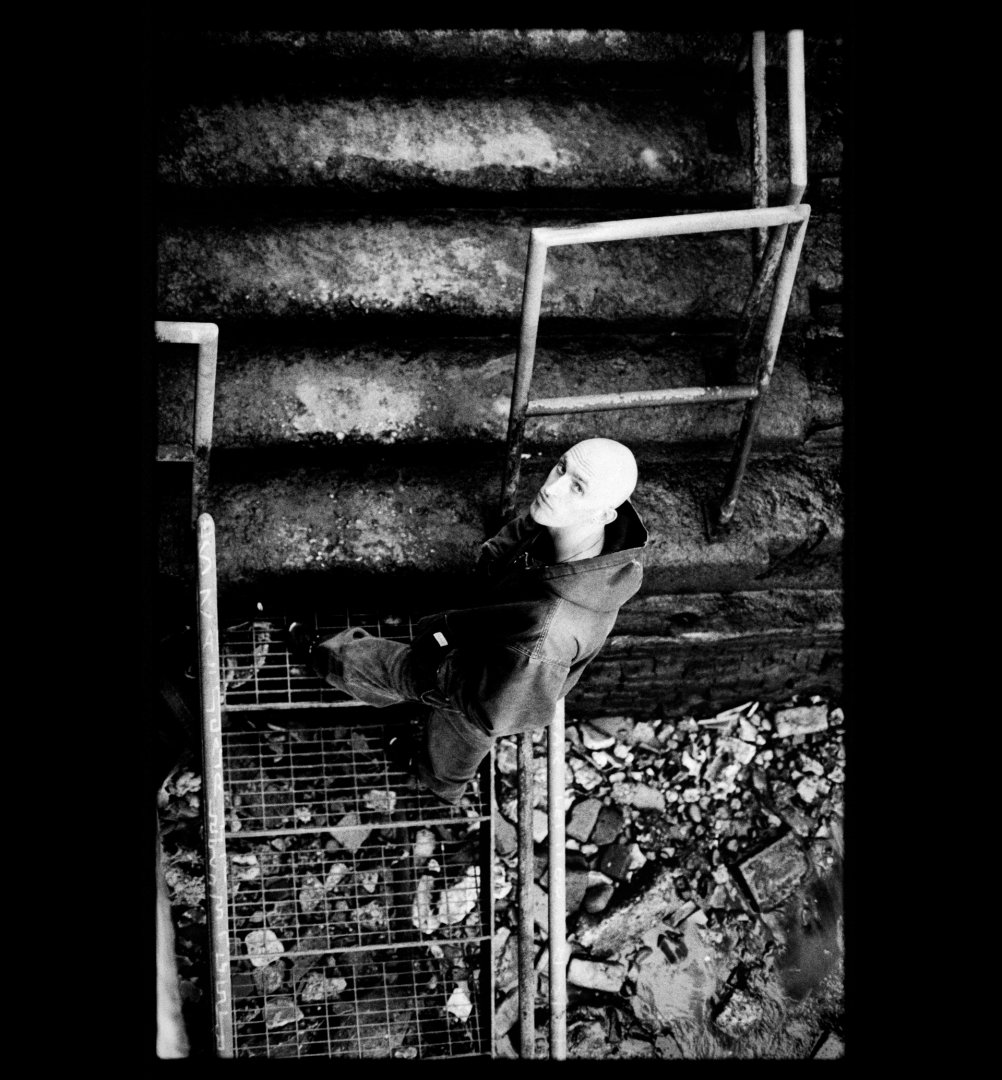
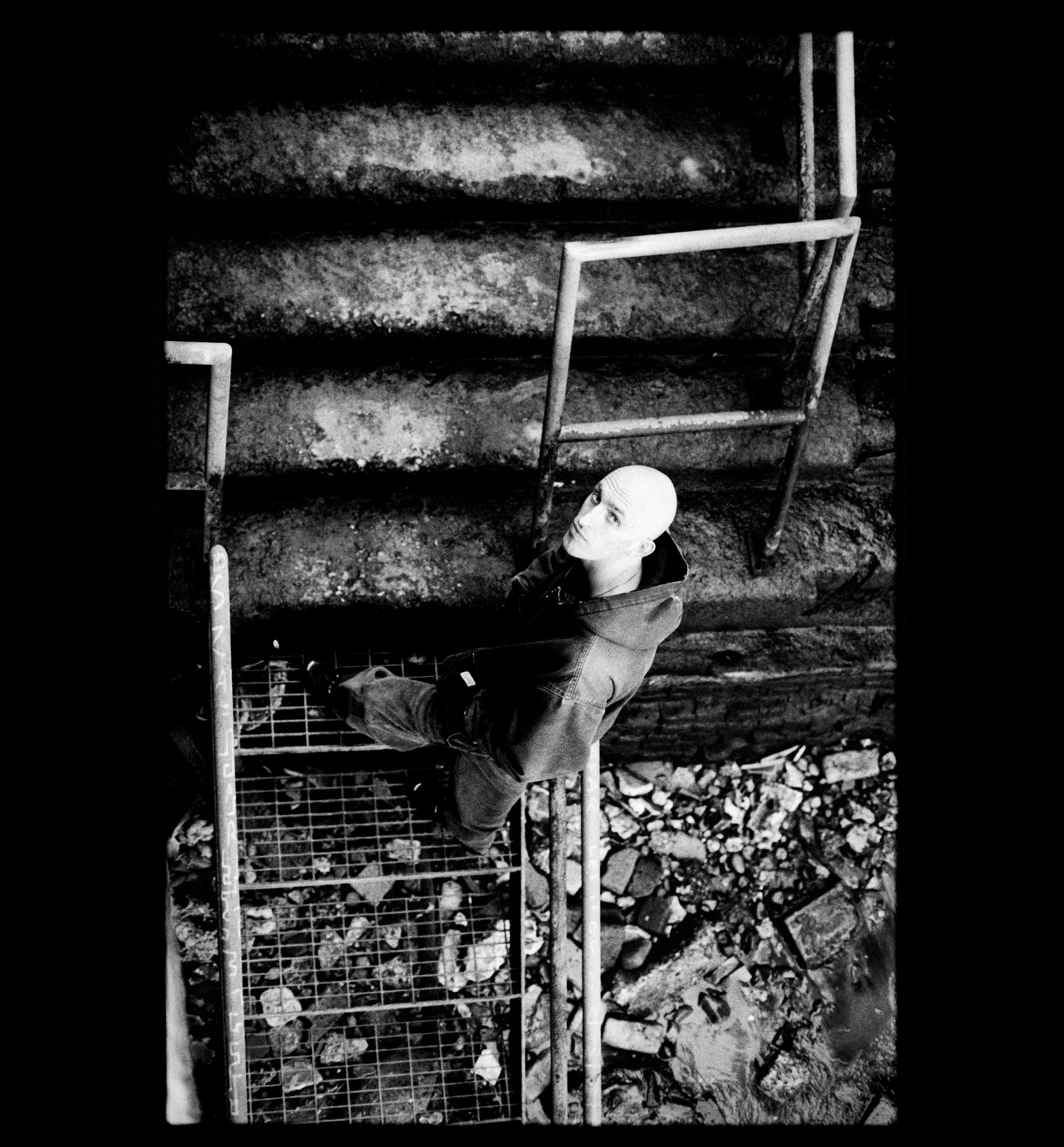
Mark William Lewis is an artist that exists between the cracks. He eschews easy genre categorisation, plays with the traditional conventions of a songwriter, and creates music that is poetically sharp, visually vivid, yet texturally opaque. Writing songs that explore the intersection between intimacy and alienation, connection and disconnection, he is a singular and bold voice operating in a distinctly unique yet blurry space. “For me, a song really starts to take shape when it has its own sense of place, and the words and music come naturally,” he says. “Because they need to describe that place and whatever interpersonal situation is going on there.”
Words, images and places are crucial to this record, the second LP from the London artist after 2023’s acclaimed Living. Every song on this innovative and genuinely original album is deeply rooted in images of specific places: houses, rooms, beds, parties, or locations across London. “I think of this album as something very thickly layered, like an impasto painting or a collage,” explains Lewis. “It was recorded in various places across London and it links to the idea of the songs having different locations and being quite collaged with different sounds and textures from different studios and rooms.”
The result is a record that sounds like very little else from a truly exceptional new voice in contemporary music. While the spirit of The Durutti Column might be felt rippling through Lewis’ liquid guitar work from time to time, what becomes clear on this is just what a unique space he has carved out to operate in. Lewis is able to glide between introspective poignancy and expansive openness with the same grace and agility that he moves from musical moments that are propulsive and full of momentum to those that are slow, atmospheric, and almost ambient-like. His ability to blend meticulous songcraft with carefully layered, and endlessly revealing, textures is ceaselessly stunning. As is Lewis’ ability to play with, and flip, musical norms and conventions. While much of his music is constructed of voice, guitar and harmonica, the typical associations that come with that combination come unmoored here. Inspired by Augustus Pablo’s use of melodica on his pioneering dub records, Lewis puts various effects on his harmonica, which creates a heavily textured, almost gaseous presence that floats around his rich resonant vocals and his deft yet dexterous guitar work on both acoustic and electric.
A song like the sublime ‘Tomorrow Is Perfect’ is a beautiful example of how Lewis has harnessed the essence of environment and physical locations and turned them into arrestingly individual pieces of work. “I can visualise every image in those lyrics,” Lewis explains. “It’s like a film, set in various locations near where I live on the river in Deptford, south east London.” The song – a tender yet piercing, sweet yet bruising piece of deeply atmospheric alt-rock that unfurls with hypnotic grace – in many ways embodies Lewis’ unique approach to lyric writing. With references to burning skies, bleeding gums, and storms, these words all bring up stark, striking and lucid images that remain open to interpretation. “In that song, I really felt like I was accessing that point with words where they are less attached to meaning,” he says. “And become like any other material – such as colour or texture or harmony.”
As someone who grew up equally exploring music, art, writing and performance, this project is about furthering the erosion of boundaries. “I think my songwriting has gotten better as I’ve stopped thinking about the distinction between poetry and music,” he says. “Writing is just writing whether I’ve got a guitar with me or not.”
And so a song like ‘Seventeen’, a melodic, infectious and almost breezy bit of folk-tinged rock that is as sweet as it is quietly devastating, sits as a perfect example. While the irresistibly catchy and hook-heavy song clearly has some dark underlying subject matter rooted in adolescence – it’s a coming-of-age song at heart – it also explores the idea of art as escapism. “He didn’t like the way the world looked / he drew a picture in a sketchbook” opens up the idea of creating an alternative visual reality through art, which is exactly the same purpose as this record.
Another potent collision of imagery, music, words and place is on the song ‘Skeletons Coupling’. Named after a Nan Goldin photograph, which depicts a bit of graffiti of two skeletons locked in an embrace, it’s woozy, evocative. immersive, melody-drenched dream pop. “I thought it was a good metaphor for when a relationship is dead,” explains Lewis of the imagery attached to the song, one that also has a sense of place attached to a party on a Thames beach. It’s also an example of a backdrop that allows Lewis to explore themes around his social life. “Social scenes and social entanglements inspired a lot of these songs,” he says. “The sometimes fraught environments provide a lot of charge and inspiration for lyrics and music.”
The closing ‘Ecstatic Heads’ is another key example of how Lewis explores this dynamic, as he places you vividly inside the room as the dying embers of a party fizzle out but people push on regardless. It’s a perfect end to a record that depicts the hazy transitional shift between night and day, as engulfing layers of harmonica, piano and drums gently crash into one another via a highly evocative finale.
In order to achieve something that is as open and free-flowing, yet also focused, as this record, Lewis on occasion would get into a state where he was almost removing himself from the process entirely at times. “I definitely had that feeling a lot throughout the album,” he says. “Where I would make something and then listen to it the next day and hear details in it and be like, oh shit, I don’t remember doing that! When that happens, it’s like a drug. It’s so addictive.”
For this album, Lewis also leaned into the idea of opening himself up musically as possible and trying to harness the same power with sounds as he has done with words. “I really let go of so many inhibitions with the production,” he explains of the co-production with Jamie Neville. “We really got to places with the production I wasn’t expecting to go.” Before he knew it, Lewis and Neville were experimenting with trumpet on ‘Still Above’ to create an almost groove-like pulse to a song that depicts the hazy and unsure feeling of the morning after an argument. “I did not bargain for trumpet at all but I love it,” Lewis says. “I used to go into the studio before and chase a certain kind of sound or style but with this record it was more about just having fun and letting the songs be themselves.”
And as a result of that process of opening up and being true to oneself, Lewis has made a record that feels like the purest embodiment of him as a complete artist to date. Which feels fitting in the decision to make this record self-titled. “It felt right but also a little bit playful,” he says. “I think every songwriter has to have a self-titled album at some point and this album is basically saying: here I am.”